Garudasana | Half Spinal Twist Pose
Garuda is known a mythical ‘king of birds’ which is called vehicle of Lord Vishnu. It is known as ‘eagles pose’ also. It resembles the majestic bird reputed to possess fantastic powers of concentration, brings flexibility and calms the fluctuations of mind. It is an easy posture without any twisting, straining or bending.
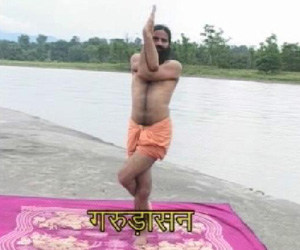
Process
1. Start to stand in Tadasana.
2. Slightly bend the knees, lift the left foot up, balance the right foot, cross the left thigh over the right.
3. Keep the left toes toward the ground, press the foot back, hook the top of the foot behind the lower right calf to balance on the right foot.
4. Stretch the arms straight forward on parallel to the ground.
5. Now raise the arms in front of your torso, keep the right arm above the left, bend the elbows.
6. Snug the rights elbows into the crook of the left.
7. Raise the forearms perpendicular to the floor. The backs of hands should face each other.
8. The thumb of the right hand pass in front of the little finger of the left.
9. Press the palms together, lift the elbows up and stretch the fingers towards the ceiling.
10. Stay in this pose from fifteen to thirty seconds, unwind the legs, arms and stand in Tadasana again.
11. Repeat the same with arms and legs with same length of time.
12. Inhale and exhale quite slowly.
13. Stop this pose if you feel any problem crop up during the practice of this asana.
Duration
Do it for fifteen to thirty seconds and repeat for at least four times. Time may be extended gradually .
Benefits
- Thighs, hips, shoulders, upper back are stretched.
- Concentration, focus is improved.
- Sense of balance and coordination improves.
- Helps to remove urinary problems.
- Useful in prostate and kidney diseases.
- Useful in pain of hands and legs.
Precaution
- Knees injuries patients should avoid it.
- Pregnant women avoid this posture.
- Obese patients are advised not to do it.