Shalabhasana | Locust Pose

Shalabhasana in Sanskrit means ‘locust’. This posture resembles a locust.
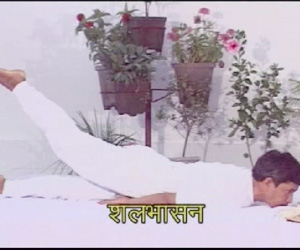
Process-1

1. Keeping face downwards lie flat on abdomen and chest.
2. Place hands under each thigh
3. Now breathing in lift the right leg up, do not bend the knee.
4. Repeat this from other leg.
5. Repeat it two to four times.

Process-2

1. Keeping face downwards lie flat on abdomen and chest.
2. Now move the right hand above the head straight, touching the ear and head.
3. Place the left hand over the waist.
4. Now while inhaling, lift the right hand and head and left foot from ground.
5. Remain in this position for sometime and return to start position while breathing out.
6. Relax for sometime to repeat it from other side.

Process-3

1. Keeping face downwards lie flat on abdomen and chest.
2. Now place both hands over the back and each wrist with other hand.
3. While inhaling, first lift the chest first then lift the legs from ground.
4. After holding for sometime return to first position while breathing out.

Duration

Do it for four to five times.

Benefits

  • This posture is good for hips,thighs,legs,buttocks,lower abdomen, wrists and diaphragm.
  • Strengthen the muscles of the back.
  • Useful in sciatica and back ache.
  • Useful in spinal disease and cervical spondylitis.
  • Reduces fat around thighs,hips,waist, and abdomen.

Precaution

  • Avoid doing it after getting surgery to avoid complication.
  • They should practice Ardh Shalabhasana for a few weeks first then switch over to this posture.
  • Avoid clenching the fists too tight or too loose.
  • Control the breathing while doing this asana

Similar Posts

  • Padmasana | Lotus Pose

    Lotus Pose or Padmasana is widely practiced asana for meditation and kundalini awakening. In India all the yogies sit most of the time in Padmasana. In this pose the devine energy flows upwards from Muladhar to Sahasrara Chakra. Procedure 1. Sit on the floor with your legs stretched straight in front. 2. Bend the right…

  • Naukasana | Boat Pose

    Nauka means ‘boat’ in Sanskrit language. It is a posture which resembles a boat. It is also known as boat posture to treat many ailments. The reverse naukasana is also very important to cure ailments. Procedure 1. Lie straight on back, resting on the floor. 2. Place the feet together and keep the arms on…

  • Sarvangasana | Shoulderstand Pose

    ‘Sarvang’ is a Sanskrit word which means ‘all limbs’ or ‘complete body’. Sarvangasana or Shoulderstand Pose benefits the complete body. Procedure 1. Lie down on the back comfortably. Keep legs straight touching each other, palms facing downwards. 2. Inhale through nostrils, waist and hips should remain on the floor, start lifting both the legs slowly…

  • Bhujangasana | Cobra Pose

    Bhujang in Sanskrit means ‘cobra’ resembles the ‘hooded snake’ and it is a cobra pose. It is one of the important postures in yoga. Spine get stretched to strengthen the arms and back. Heart, chest and many physical and psychological benefits are attained in this posture. Purna Bhujangasana This is a variant of bhujangasana. Following…

  • Halasana | Plow Pose

    Hala is a sanskrit word, which means ‘plow’. Body looks like a plow while practicing Hala Asana. This posture is like an extension to Sarvangasana. Benefits of Halasana pose are numerous like sarnangasana. Procedure 1. Lie down on the back comfortably inhale through nostrils, joint both legs together and raise upwards slowly, till legs make…