Halasana | Plow Pose

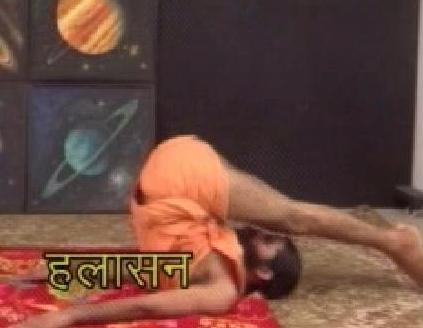
Hala is a sanskrit word, which means ‘plow’. Body looks like a plow while practicing Hala Asana. This posture is like an extension to Sarvangasana. Benefits of Halasana pose are numerous like sarnangasana.

Procedure

1. Lie down on the back comfortably inhale through nostrils, joint both legs together and raise upwards slowly, till legs make 90 degree angle with the body. Keep the hands facing down, you can take support of hands with the floor to make the practice easier.

2. Continue bending the joined legs over the head by lifting towards back, till the toes touches the floor just behind the head. You can take support of both the hands while bending legs over head, but after touching toes to the floor, take the hands back on the floor with palms facing down the floor.

3. Breath normally and keep the knees straight. This is the final position. In the beginning, if you are unable to touch the floor by toes, try to make it as nearest as possible. Hold at this position about 30 seconds.

4. Now reverse the process slowly step by step back to normal in savasana.
Duration

Halasana or Plow Pose can be practiced normally upto 30-seconds. In the beginning, the practitioner should hold the pose till he/she feels comfortable, don’t try to overdo it.

Benefits

  • Benefits of halasana pose are numerous like sarvangasana. Muscles and ligaments of thighs and calves are stretched and relaxed, which results greater legs flexibility. Legs cramps are relaxed with it.
  • Makes the spinal cord flexible and strong. Muscles of back also get stronger.
  • Cures the problems of ‘thyroid’ gland which leads to complete health to prevent obesity and harmonal diseases.
  • Helpful in gastric and constipation problems. Cures Liver, Pancreas, Spline problems.

Precautions

  • It must be practiced under guidance of experienced yoga teacher.
  • Women during menstrual periods should avoid halasana.
  • Blood Pressure, Cirvical and Spinal Cord patients should not do it without doctor’s advise.

Similar Posts

  • Vrikshasana | Tree pose

    Vriksh means a tree and this pose resembles a tree and is known as the tree pose. It helps to strengthen the back, calves, thighs and ankles. Flexibility of groin and hips area get increased. Balance and concentration is improved. Process 1. Begin with Tadasana. 2. Place the both hand on ground while standing up,…

  • Garbhasana | Fetus Pose

    Garbha means foetus in the womb. This posture gives complete relaxation. The speed of inhalation and exhalation get reduced in this pose. It is quite beneficial asana for the whole body. Mind of a man starts getting communion with the soul after the perfection of this posture. All inner organs get toned up in this…

  • Mayurasana | Peacock Pose

    Mayur in Sanskrit language means ‘peacock’, in this posture, the body takes the shape of peacock. In this asana, one has to hold the whole body like a stick on the both elbows. Process 1. Start with sitting on knees and place the palms on ground while finger pointing towards stomach. 2. Take a deep…

  • Kandharasana | Shoulder Pose

    Kandharasana or Shoulder Pose is an easy practice for stretching the back, abdominal and waist especially. It is good for relieving these area’s problems. Procedure 1. Lie down on the back like shavasana. 2. Bend the knees and put the heels touching the buttocks. Now grasp the ankles with respective hands. 3. While inhaling, raise…

  • Vrschikasana | Scorpion Pose

    Vrschik in Sanskrit means scorpion and this asana resembles a scorpion ready to strike its victim by arching its tail above its back. The person should make an attempt to feel comfortable in holding headstand posture and handstand pose before doing the scorpion pose. Process 1. While sitting on ground  place both hands on ground…

  • Sarvangasana | Shoulderstand Pose

    ‘Sarvang’ is a Sanskrit word which means ‘all limbs’ or ‘complete body’. Sarvangasana or Shoulderstand Pose benefits the complete body. Procedure 1. Lie down on the back comfortably. Keep legs straight touching each other, palms facing downwards. 2. Inhale through nostrils, waist and hips should remain on the floor, start lifting both the legs slowly…