Bhujangasana | Cobra Pose

Bhujang in Sanskrit means ‘cobra’ resembles the ‘hooded snake’ and it is a cobra pose. It is one of the important postures in yoga. Spine get stretched to strengthen the arms and back. Heart, chest and many physical and psychological benefits are attained in this posture.
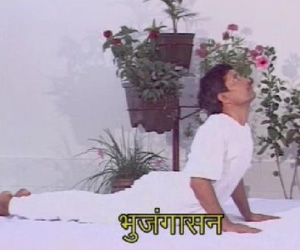
Purna Bhujangasana

This is a variant of bhujangasana. Following is the picture. In this procedure, hands are put jointly at the front, just below the stomach.
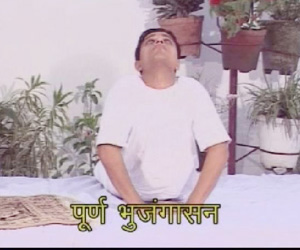
Technique

1. Lie down on the stomach and relax all the muscles completely.
2. Rest the forehead on the floor.
3. Put the legs together and arms close to the body, keep hands beside the chest, palm facing ground.
4. Inhale slowly and raise the upper part of body including chest and head to the maximum extent possible just like cobra raising its hood.
5. Don’t create any jerk.
6. Bending of vertebrae is felt gradually, feel the pressure downwards from cervical, dorsal, lumbar and to the sacral portion of the body.
7. Position your chest and head upwards.
8. Try to maintain this position for thirty seconds.
9. Exhale slowly to bring down trunk smoothly to the floor, starting from navel area, thorax shoulders, chin and forehead.
10. The beginners can get the help of arms to raise upper part of body. The hands must remain together.
11. Try to put minimum weight on hands. Divide weight on spine and arms.
12. The thumb should touch the chest near armpit in final position
13. On coming back some persons bend their head first, avoid it . The part of the body which leaves the ground first will return to the ground last.

Duration

It should be practiced four-five times in one session.

Benefits

  • Stimulates the endocrine system.
  • The flexibility of spine is strengthened .
  • Superficial muscles of the back toned up.
  • The abdominal muscles strengthened.
  • Useful in spinal disc problems including cervical spondylosis and slip disk.

Precautions

  • This asana is strictly prohibited for pregnant women.
  • Patients who are suffering from hernia, intestinal tuberculosis or hyperthyroidism should not perform this asana.
  • The person  suffering from peptic ulcers should avoid doing  this posture

.

Similar Posts

  • Shavasana | Corpse Pose

    Shavasana or ‘Corpse Pose’ is normally practiced at the beginning and at the end of yoga session, because the purpose is to relax of the body completely including mind and spirit. This is excellent asana for reducing tiredness, stress and tension. Procedure 1. Lie down comfortably on the back, keep legs apart from each other….

  • Markatasana | Monkey Pose

    In sanskrit language, monkey is called as ‘markata’ and asana means posture. Therefore, Markat asana also called as ‘Monkey Pose’. Mainly, markatasana is for strengthening the spine and improvement of spinal flexibility. This is very helpful yoga pose to cure sciatica. Also good for stomach problems like liver, spleen, kidney ailments. How to do Markatasana ?…

  • Vrikshasana | Tree pose

    Vriksh means a tree and this pose resembles a tree and is known as the tree pose. It helps to strengthen the back, calves, thighs and ankles. Flexibility of groin and hips area get increased. Balance and concentration is improved. Process 1. Begin with Tadasana. 2. Place the both hand on ground while standing up,…

  • Siddhasana | Adept Pose

    Siddhasana or Adept Pose technique is one of the best for meditation. ‘Siddha’ is a sanskrit word which means ‘adept’ or ‘accomplished’, one who has attained the bliss. One who has awakened the kundalini power. The name of this asana signifies the attainment of complete peaceful mind. Procedure 1. Siddha asana is a seated posture….

  • Halasana | Plow Pose

    Hala is a sanskrit word, which means ‘plow’. Body looks like a plow while practicing Hala Asana. This posture is like an extension to Sarvangasana. Benefits of Halasana pose are numerous like sarnangasana. Procedure 1. Lie down on the back comfortably inhale through nostrils, joint both legs together and raise upwards slowly, till legs make…

  • Vrschikasana | Scorpion Pose

    Vrschik in Sanskrit means scorpion and this asana resembles a scorpion ready to strike its victim by arching its tail above its back. The person should make an attempt to feel comfortable in holding headstand posture and handstand pose before doing the scorpion pose. Process 1. While sitting on ground  place both hands on ground…