Pawanmuktasana | Wind Releasing Pose

Pawanmuktasana is a sanskrit word. Pawan means wind or air, and mukta means releasing. As the name describes, gas is released from stomach digestive tract by practicing this asana. Pawanmuktasana or wind releasing pose is an excellent asana for stomach and digestive organs.

Procedure

1. Lie down flat like shavasana.

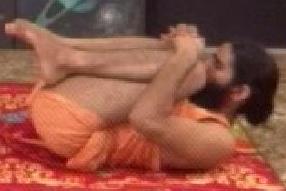
2. Bend the right knee up to the stomach as much as possible. Exhale and pull right knee to touch the chest with help of both hands by interlocking fingers, just below the knee. Now raise the head and touch the nose to the knee. If not possible to touch, try to do as nearest as possible. Stay at this pose from 10 to 30 seconds with keeping breath out.
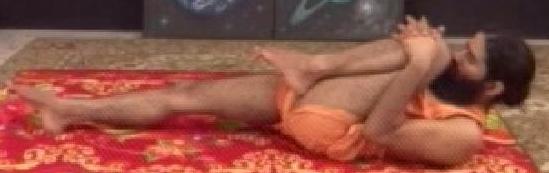
3. Now repeat the same procedure with left leg.

4. At last, the same process is repeated with both the legs simultaneously. This way, one cycle or series is completed. The whole process is repeated 3-5 times.
Duration

Pawanmuktasana or Wind Releasing Pose is a very easy asana. It can be performed 3-5 complete cycles with each leg and both legs.

Benefits

  • This asana is exactly like it’s name. Best for releasing air from the intestines.
  • Very relaxing and good asana pose for women with uterus problems.
  • Pawanmuktasana is very helpful in slip disc, sciatica and waist pain. Good for acidity, gas, heart problems, arthritis and waist pain. It reduces extra abdominal fat.

Precautions

It you have sever pain in the back or waist and not able to touch the nose to knee, don’t do it, but still try to do as nearest as possible. Pawanmuktasana is very helpful in slip disc, sciatica pain and waist pain.

Similar Posts

  • Shavasana | Corpse Pose

    Shavasana or ‘Corpse Pose’ is normally practiced at the beginning and at the end of yoga session, because the purpose is to relax of the body completely including mind and spirit. This is excellent asana for reducing tiredness, stress and tension. Procedure 1. Lie down comfortably on the back, keep legs apart from each other….

  • Padmasana | Lotus Pose

    Lotus Pose or Padmasana is widely practiced asana for meditation and kundalini awakening. In India all the yogies sit most of the time in Padmasana. In this pose the devine energy flows upwards from Muladhar to Sahasrara Chakra. Procedure 1. Sit on the floor with your legs stretched straight in front. 2. Bend the right…

  • Makarasana | Crocodile Pose

    Makara in Sanskrit means crocodile and is one of the easiest postures to cure back and knees problems. Slip disc and sciatica can also be  cured. This asana helps in de-stressing and relaxation like shavasana. It relaxes the muscles after fatigue or jogging sprint. It alleviates breathing troubles and cures problem like high blood pressure….

  • Vajrasana | Diamond Pose

    Vajrasana is a sanskrit word which has two parts, ‘vajra’ and ‘asana’. Vajra means ‘Thunderbolt’ or ‘Diamond’, therefore it is also called ‘Diamond Pose’. Procedure Vajrasana is an easy sitting posture. 1. Fold both the knees, keep them joint with each other and sit on the pit formed   by  the heels. 2. Keep the spine,…

  • Bakasana | Crane Pose

    Baka in Sanskrit language means crane which is a bird. This is a compact arm balance posture which gives a lot of patience to the tense person. It tones up, strengthen the abdominal organs and arms. Arm balances require patience, concentration, cheerful behavior and not huge strength. Process 1. Place the palms of both hands…

  • Agnisar Kriya

    Agni means fire and “sara” means ‘essence’, kriya means ‘action’. It is a cleansing practice in which internal fire is stoked. It helps to heat up the body from within in order to stimulate digestion and detoxify the bodily systems. Process of Agnisara Kriya by Swami Ramdev ji 1. Sit in a comfortable pose of…