Paschimottanasana | Back Stretching Pose

Pashima means ‘west’ and uttana means ‘intense stretch’. This posture looks very simple but is actually the most difficult to do. Learn this posture under the supervision of some expert yogi.
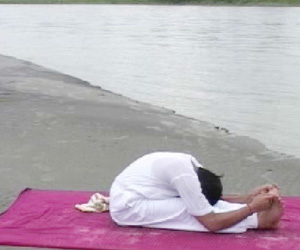
Process

1. Sit on a mat with legs stretched straight out in front of you.
2. Hold the thumbs of both legs with thumb and index finger.
3. Now while exhaling bend forward, keeping legs straight and try to keep both elbows on both sides  of legs on ground.
4. Remain in this position as possible, from few seconds to up to three minutes holding your breath, then start inhaling and slowly return to start position.

Duration

Do it from few seconds to three minutes.

Benefits

  • Tones up back and spine.
  • Helpful in increasing height.
  • Helpful for the kidneys, liver, ovaries and uterus.
  • Increases appetite, reduces obesity, and cures numerous diseases.

Precaution

  • Don’t do it in case you are suffering from back problem, asthma, diarrhea.
  • Never force yourself to bend forward.
  • Avoid,  if surgery is performed.

Similar Posts

  • Bhujangasana | Cobra Pose

    Bhujang in Sanskrit means ‘cobra’ resembles the ‘hooded snake’ and it is a cobra pose. It is one of the important postures in yoga. Spine get stretched to strengthen the arms and back. Heart, chest and many physical and psychological benefits are attained in this posture. Purna Bhujangasana This is a variant of bhujangasana. Following…

  • Konasana | Angle Pose

    Konasana or Angle Pose is also known as open angle or seated wide leg forward bends.  Kona means angle and asana means posture. Procedure 1. Stand up straight with keeping the distance of legs around two feet. 2. Inhale slowly to and turn body to the left bending at the waist to bring left hand…

  • Chakrasana | Wheel Pose

    Chakra means wheal, in sanskrit. The body looks like wheel’s shape while doing Chakra Asana. This is also known as Urdhva-dhanur-asana, which means pose similar to ‘bow’. Urdhva means elevated or upright and Dhanur stands for bow. This way we may call it ‘Raised Bow Pose’. Procedure 1. Lie flat on the back comfortably like…

  • Shalabhasana | Locust Pose

    Shalabhasana in Sanskrit means ‘locust’. This posture resembles a locust. Process-1 1. Keeping face downwards lie flat on abdomen and chest. 2. Place hands under each thigh 3. Now breathing in lift the right leg up, do not bend the knee. 4. Repeat this from other leg. 5. Repeat it two to four times. Process-2…