Padahastasana | Standing Forward Bend

Pada means ‘foot’ and hasta means hands in Sanskrit. Pada hasta means from hand to foot. This asana is also included in surya namaskar sequence that is at third and tenth pose. It is good for muscles and skeletal system.
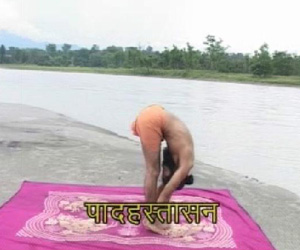
Process

1. Stand in Tadasana,  exhale and bend downward from the waist.
2. Keep your legs straight and bring your finger tips or if possible your palms  gently on floor, in front of your legs, or put the hands beside your legs.
3. Place your face on legs.
4. Remain in this position for few seconds.
5. Now inhale slowly and return back to start position.
6. Repeat this posture after relaxing for a while.

Duration

Don’t do it for more than from five to six times initially. Later on it can be extended up to a minute.

Benefits

  • Tones abdominal organs.
  • Bloating of abdomen,constipation,indigestion,other gastric problems really get alleviated.
  • Spine become straight, flexible and resilient.
  • Reduces fat around abdomen.
  • Helps to gain height.

Precautions

  • Persons having back problems should avoid it.
  • Consult the doctor before starting doing this asana who are suffering from ailments.

Similar Posts

  • Padmasana | Lotus Pose

    Lotus Pose or Padmasana is widely practiced asana for meditation and kundalini awakening. In India all the yogies sit most of the time in Padmasana. In this pose the devine energy flows upwards from Muladhar to Sahasrara Chakra. Procedure 1. Sit on the floor with your legs stretched straight in front. 2. Bend the right…

  • Sarvangasana | Shoulderstand Pose

    ‘Sarvang’ is a Sanskrit word which means ‘all limbs’ or ‘complete body’. Sarvangasana or Shoulderstand Pose benefits the complete body. Procedure 1. Lie down on the back comfortably. Keep legs straight touching each other, palms facing downwards. 2. Inhale through nostrils, waist and hips should remain on the floor, start lifting both the legs slowly…

  • Kandharasana | Shoulder Pose

    Kandharasana or Shoulder Pose is an easy practice for stretching the back, abdominal and waist especially. It is good for relieving these area’s problems. Procedure 1. Lie down on the back like shavasana. 2. Bend the knees and put the heels touching the buttocks. Now grasp the ankles with respective hands. 3. While inhaling, raise…

  • Vajrasana | Diamond Pose

    Vajrasana is a sanskrit word which has two parts, ‘vajra’ and ‘asana’. Vajra means ‘Thunderbolt’ or ‘Diamond’, therefore it is also called ‘Diamond Pose’. Procedure Vajrasana is an easy sitting posture. 1. Fold both the knees, keep them joint with each other and sit on the pit formed   by  the heels. 2. Keep the spine,…