Siddhasana | Adept Pose
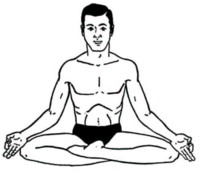
Siddhasana or Adept Pose technique is one of the best for meditation. ‘Siddha’ is a sanskrit word which means ‘adept’ or ‘accomplished’, one who has attained the bliss. One who has awakened the kundalini power. The name of this asana signifies the attainment of complete peaceful mind.

Procedure

1. Siddha asana is a seated posture. Sit on the floor on mat. ‘Bend the left leg from the knee’ by grabbing the foot by hands and put the heel just below the Sivni Nadi or perineum (between anus and genitals). By doing this, you will be in posture of sitting on the left leg’s heel.

2. Now bend the right leg, put right foot on the left in such a way that ankles of both the feet should touch each other. Right ankle should be on left ankle.

3. Now put both the hands on the keens with palms up, in Gyan Mudra (thumb and index finger touching each other, remaining three fingers straight) like padmasana.

4. Close your eyes, sit calmly and concentrate the mind as much as possible.

Duration

In the beginning sit in siddha asana for the time as comfortable for you. Don’t overdo it. As the practice increases, this can be done upto 10 minuts for a normal practitioner.

Yogies, the kundalini practitioners do meditation in siddhasana for long hours for the atainment of bliss and kundalini power.

Benefits

  • The ‘vital energy’ flows upwards from Muladhar Chakra to Sahasrar Chakra. One of the best asana for meditation. It helps to maintain equilibrium between body and mind.
  • Very helpful to cure piles, hemorrhoids and sexual diseases.

Similar Posts

  • Agnisar Kriya

    Agni means fire and “sara” means ‘essence’, kriya means ‘action’. It is a cleansing practice in which internal fire is stoked. It helps to heat up the body from within in order to stimulate digestion and detoxify the bodily systems. Process of Agnisara Kriya by Swami Ramdev ji 1. Sit in a comfortable pose of…

  • Halasana | Plow Pose

    Hala is a sanskrit word, which means ‘plow’. Body looks like a plow while practicing Hala Asana. This posture is like an extension to Sarvangasana. Benefits of Halasana pose are numerous like sarnangasana. Procedure 1. Lie down on the back comfortably inhale through nostrils, joint both legs together and raise upwards slowly, till legs make…

  • Naukasana | Boat Pose

    Nauka means ‘boat’ in Sanskrit language. It is a posture which resembles a boat. It is also known as boat posture to treat many ailments. The reverse naukasana is also very important to cure ailments. Procedure 1. Lie straight on back, resting on the floor. 2. Place the feet together and keep the arms on…

  • Vajrasana | Diamond Pose

    Vajrasana is a sanskrit word which has two parts, ‘vajra’ and ‘asana’. Vajra means ‘Thunderbolt’ or ‘Diamond’, therefore it is also called ‘Diamond Pose’. Procedure Vajrasana is an easy sitting posture. 1. Fold both the knees, keep them joint with each other and sit on the pit formed   by  the heels. 2. Keep the spine,…

  • Vrschikasana | Scorpion Pose

    Vrschik in Sanskrit means scorpion and this asana resembles a scorpion ready to strike its victim by arching its tail above its back. The person should make an attempt to feel comfortable in holding headstand posture and handstand pose before doing the scorpion pose. Process 1. While sitting on ground  place both hands on ground…

  • Chakrasana | Wheel Pose

    Chakra means wheal, in sanskrit. The body looks like wheel’s shape while doing Chakra Asana. This is also known as Urdhva-dhanur-asana, which means pose similar to ‘bow’. Urdhva means elevated or upright and Dhanur stands for bow. This way we may call it ‘Raised Bow Pose’. Procedure 1. Lie flat on the back comfortably like…