Pawanmuktasana | Wind Releasing Pose

Pawanmuktasana is a sanskrit word. Pawan means wind or air, and mukta means releasing. As the name describes, gas is released from stomach digestive tract by practicing this asana. Pawanmuktasana or wind releasing pose is an excellent asana for stomach and digestive organs.

Procedure

1. Lie down flat like shavasana.

2. Bend the right knee up to the stomach as much as possible. Exhale and pull right knee to touch the chest with help of both hands by interlocking fingers, just below the knee. Now raise the head and touch the nose to the knee. If not possible to touch, try to do as nearest as possible. Stay at this pose from 10 to 30 seconds with keeping breath out.
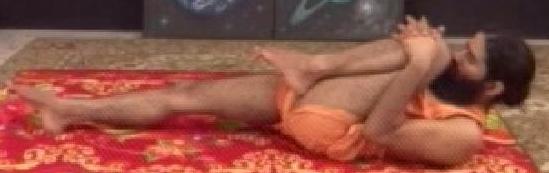
3. Now repeat the same procedure with left leg.

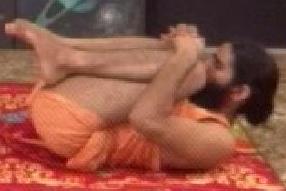
4. At last, the same process is repeated with both the legs simultaneously. This way, one cycle or series is completed. The whole process is repeated 3-5 times.
Duration

Pawanmuktasana or Wind Releasing Pose is a very easy asana. It can be performed 3-5 complete cycles with each leg and both legs.

Benefits

  • This asana is exactly like it’s name. Best for releasing air from the intestines.
  • Very relaxing and good asana pose for women with uterus problems.
  • Pawanmuktasana is very helpful in slip disc, sciatica and waist pain. Good for acidity, gas, heart problems, arthritis and waist pain. It reduces extra abdominal fat.

Precautions

It you have sever pain in the back or waist and not able to touch the nose to knee, don’t do it, but still try to do as nearest as possible. Pawanmuktasana is very helpful in slip disc, sciatica pain and waist pain.

Similar Posts

  • Bakasana | Crane Pose

    Baka in Sanskrit language means crane which is a bird. This is a compact arm balance posture which gives a lot of patience to the tense person. It tones up, strengthen the abdominal organs and arms. Arm balances require patience, concentration, cheerful behavior and not huge strength. Process 1. Place the palms of both hands…

  • Chakrasana | Wheel Pose

    Chakra means wheal, in sanskrit. The body looks like wheel’s shape while doing Chakra Asana. This is also known as Urdhva-dhanur-asana, which means pose similar to ‘bow’. Urdhva means elevated or upright and Dhanur stands for bow. This way we may call it ‘Raised Bow Pose’. Procedure 1. Lie flat on the back comfortably like…

  • Vrschikasana | Scorpion Pose

    Vrschik in Sanskrit means scorpion and this asana resembles a scorpion ready to strike its victim by arching its tail above its back. The person should make an attempt to feel comfortable in holding headstand posture and handstand pose before doing the scorpion pose. Process 1. While sitting on ground  place both hands on ground…

  • Markatasana | Monkey Pose

    In sanskrit language, monkey is called as ‘markata’ and asana means posture. Therefore, Markat asana also called as ‘Monkey Pose’. Mainly, markatasana is for strengthening the spine and improvement of spinal flexibility. This is very helpful yoga pose to cure sciatica. Also good for stomach problems like liver, spleen, kidney ailments. How to do Markatasana ?…

  • Vrikshasana | Tree pose

    Vriksh means a tree and this pose resembles a tree and is known as the tree pose. It helps to strengthen the back, calves, thighs and ankles. Flexibility of groin and hips area get increased. Balance and concentration is improved. Process 1. Begin with Tadasana. 2. Place the both hand on ground while standing up,…

  • Mayurasana | Peacock Pose

    Mayur in Sanskrit language means ‘peacock’, in this posture, the body takes the shape of peacock. In this asana, one has to hold the whole body like a stick on the both elbows. Process 1. Start with sitting on knees and place the palms on ground while finger pointing towards stomach. 2. Take a deep…