Sirsasana | Headstand Pose

Sirsa in Sanskrit means head and this asana cures all diseases. This is one of the tough asanas.
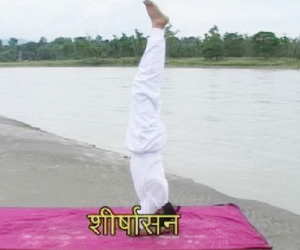
Process

1. Start with a folded blanket to put the head and forearms on it
2. Kneel on the ground and put the fingers together, keep the forearms on the ground.
3. Place the blanket between the palms.
4. Open the hands to place the head into open palms.
5. Move the feet carefully closer to the elbows, heels elevated.
6. Exhale to lift the one feet from the ground, then lift other feet from the ground and try to keep them straight.  After practicing some time both feet can be lifted simultaneously.
7. Keep legs, thighs, knees perpendicular to the ground
8. Put the weight equally balanced on two forearms
9. Stay there for few seconds, breathe  normally.
10. Come down with exhaling ,let the both feet touch the ground at the same time and relax in shavasana for a few minutes to normalize the blood circulation

Duration

Start with a stay for few second and add five to ten second every day to extend it up to three minutes. Do it for a week or two and extend it up to five minutes gradually.

Benefits

  • Brain calms down , relieve stress and mild depression.
  • Stimulates pituitary and pineal glands.
  • Strengthens arms, legs, and spine.
  • Tones up abdominal organs and digestion improves.
  • Relieve the symptoms of menopause .
  • Improves functioning of thyroid gland.

Precautions

  • Avoid it if suffering from back injuries.
  • Don’t do it in headache.
  • Patients with heart or blood pressure problems should avoid it.
  • Start this asana under the supervision of an experienced person.
  • Beginner should take the support of wall to rest their legs on because it is difficult for some person to raise legs upwards.
  • Breathe normally and don’t hold breath while standing on head.

Similar Posts

  • Shalabhasana | Locust Pose

    Shalabhasana in Sanskrit means ‘locust’. This posture resembles a locust. Process-1 1. Keeping face downwards lie flat on abdomen and chest. 2. Place hands under each thigh 3. Now breathing in lift the right leg up, do not bend the knee. 4. Repeat this from other leg. 5. Repeat it two to four times. Process-2…

  • Markatasana | Monkey Pose

    In sanskrit language, monkey is called as ‘markata’ and asana means posture. Therefore, Markat asana also called as ‘Monkey Pose’. Mainly, markatasana is for strengthening the spine and improvement of spinal flexibility. This is very helpful yoga pose to cure sciatica. Also good for stomach problems like liver, spleen, kidney ailments. How to do Markatasana ?…

  • Garbhasana | Fetus Pose

    Garbha means foetus in the womb. This posture gives complete relaxation. The speed of inhalation and exhalation get reduced in this pose. It is quite beneficial asana for the whole body. Mind of a man starts getting communion with the soul after the perfection of this posture. All inner organs get toned up in this…

  • Konasana | Angle Pose

    Konasana or Angle Pose is also known as open angle or seated wide leg forward bends.  Kona means angle and asana means posture. Procedure 1. Stand up straight with keeping the distance of legs around two feet. 2. Inhale slowly to and turn body to the left bending at the waist to bring left hand…

  • Vrschikasana | Scorpion Pose

    Vrschik in Sanskrit means scorpion and this asana resembles a scorpion ready to strike its victim by arching its tail above its back. The person should make an attempt to feel comfortable in holding headstand posture and handstand pose before doing the scorpion pose. Process 1. While sitting on ground  place both hands on ground…

  • Halasana | Plow Pose

    Hala is a sanskrit word, which means ‘plow’. Body looks like a plow while practicing Hala Asana. This posture is like an extension to Sarvangasana. Benefits of Halasana pose are numerous like sarnangasana. Procedure 1. Lie down on the back comfortably inhale through nostrils, joint both legs together and raise upwards slowly, till legs make…