Chakrasana | Wheel Pose

Chakra means wheal, in sanskrit. The body looks like wheel’s shape while doing Chakra Asana. This is also known as Urdhva-dhanur-asana, which means pose similar to ‘bow’. Urdhva means elevated or upright and Dhanur stands for bow. This way we may call it ‘Raised Bow Pose’.

Procedure

1. Lie flat on the back comfortably like shavasana.

2. Bend the knees completely as feet should touch the buttocks.

3. Bend arms at the elbows over the head, and place the palms on the floor, just under both shoulders. Fingers should be pointing toward the back.

4. While inhaling, slowly start raising the head, chest, stomach and waist upward by arching the spine. Keep pressing the floor by hands and feet. Try raising your body this way as high as possible.
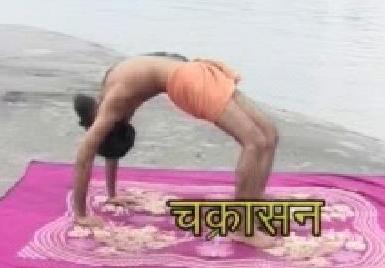
5. Now, if possible for you comfortably, along with maintaining this posture, try to bring hands and feet nearer on the floor so as to make a wheel like structure.

6. For coming back to normal position of shavasana, reverse the steps slowly while exhaling.

Duration

The duration at the final posture is as per your comfort, don’t overdo it. Chakrasana can be repeated 3-4 times.

Chakrasana Benefits

  • Makes the spinal cord flexible and strengthens stomach and intestines.
  • Helpful for waist pain, headache, eye problems, cervical and spondylosis
  • Makes muscles of hands, thighs, legs stronger.
  • Helpful for women’s menstrual disorders and uterus problems.

Similar Posts

  • Agnisar Kriya

    Agni means fire and “sara” means ‘essence’, kriya means ‘action’. It is a cleansing practice in which internal fire is stoked. It helps to heat up the body from within in order to stimulate digestion and detoxify the bodily systems. Process of Agnisara Kriya by Swami Ramdev ji 1. Sit in a comfortable pose of…

  • Mayurasana | Peacock Pose

    Mayur in Sanskrit language means ‘peacock’, in this posture, the body takes the shape of peacock. In this asana, one has to hold the whole body like a stick on the both elbows. Process 1. Start with sitting on knees and place the palms on ground while finger pointing towards stomach. 2. Take a deep…

  • Shalabhasana | Locust Pose

    Shalabhasana in Sanskrit means ‘locust’. This posture resembles a locust. Process-1 1. Keeping face downwards lie flat on abdomen and chest. 2. Place hands under each thigh 3. Now breathing in lift the right leg up, do not bend the knee. 4. Repeat this from other leg. 5. Repeat it two to four times. Process-2…

  • Padmasana | Lotus Pose

    Lotus Pose or Padmasana is widely practiced asana for meditation and kundalini awakening. In India all the yogies sit most of the time in Padmasana. In this pose the devine energy flows upwards from Muladhar to Sahasrara Chakra. Procedure 1. Sit on the floor with your legs stretched straight in front. 2. Bend the right…

  • Halasana | Plow Pose

    Hala is a sanskrit word, which means ‘plow’. Body looks like a plow while practicing Hala Asana. This posture is like an extension to Sarvangasana. Benefits of Halasana pose are numerous like sarnangasana. Procedure 1. Lie down on the back comfortably inhale through nostrils, joint both legs together and raise upwards slowly, till legs make…