Shavasana | Corpse Pose

Shavasana or ‘Corpse Pose’ is normally practiced at the beginning and at the end of yoga session, because the purpose is to relax of the body completely including mind and spirit. This is excellent asana for reducing tiredness, stress and tension.

Procedure

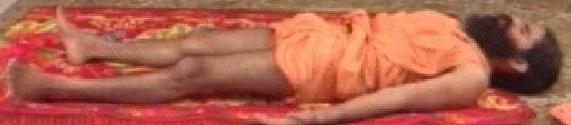
1. Lie down comfortably on the back, keep legs apart from each other. Hands should be close to the body, but not touching the body.

2. Keep the eyes gently closed, breath slowly through the nostrils, longer and deeply. Release all controls over the body, breath and mind.

3. Starting from ‘toe’ to the ‘crown of the head’, concentrate the mind to every single part of your body ‘one by   one’ and consciously relax each part before proceeding to the next one.

4. Normally when the body gets relax, practitioner may feel sleepy during practice. In that situation, you may breath little faster and deeper.
Duration

Not any specific time is mentioned for Shavasana or Corpse Pose. Practice for 3-5 minutes per day is sufficient. While it can be practiced more up to 30 minutes as per convenience.

Shavasana Benefits

  • It makes the heart and pulse rate normal, breathing and brain back to normal.
  • Highly recommended for the patients of depression, high blood pressure, heart diseases and sleeping disorder.
  • Helpful for tiredness, nervous system disorders. It also helps to remove negative thinking.

Similar Posts

  • Vajrasana | Diamond Pose

    Vajrasana is a sanskrit word which has two parts, ‘vajra’ and ‘asana’. Vajra means ‘Thunderbolt’ or ‘Diamond’, therefore it is also called ‘Diamond Pose’. Procedure Vajrasana is an easy sitting posture. 1. Fold both the knees, keep them joint with each other and sit on the pit formed   by  the heels. 2. Keep the spine,…

  • Halasana | Plow Pose

    Hala is a sanskrit word, which means ‘plow’. Body looks like a plow while practicing Hala Asana. This posture is like an extension to Sarvangasana. Benefits of Halasana pose are numerous like sarnangasana. Procedure 1. Lie down on the back comfortably inhale through nostrils, joint both legs together and raise upwards slowly, till legs make…

  • Naukasana | Boat Pose

    Nauka means ‘boat’ in Sanskrit language. It is a posture which resembles a boat. It is also known as boat posture to treat many ailments. The reverse naukasana is also very important to cure ailments. Procedure 1. Lie straight on back, resting on the floor. 2. Place the feet together and keep the arms on…

  • Chakrasana | Wheel Pose

    Chakra means wheal, in sanskrit. The body looks like wheel’s shape while doing Chakra Asana. This is also known as Urdhva-dhanur-asana, which means pose similar to ‘bow’. Urdhva means elevated or upright and Dhanur stands for bow. This way we may call it ‘Raised Bow Pose’. Procedure 1. Lie flat on the back comfortably like…

  • Agnisar Kriya

    Agni means fire and “sara” means ‘essence’, kriya means ‘action’. It is a cleansing practice in which internal fire is stoked. It helps to heat up the body from within in order to stimulate digestion and detoxify the bodily systems. Process of Agnisara Kriya by Swami Ramdev ji 1. Sit in a comfortable pose of…

  • Kandharasana | Shoulder Pose

    Kandharasana or Shoulder Pose is an easy practice for stretching the back, abdominal and waist especially. It is good for relieving these area’s problems. Procedure 1. Lie down on the back like shavasana. 2. Bend the knees and put the heels touching the buttocks. Now grasp the ankles with respective hands. 3. While inhaling, raise…